
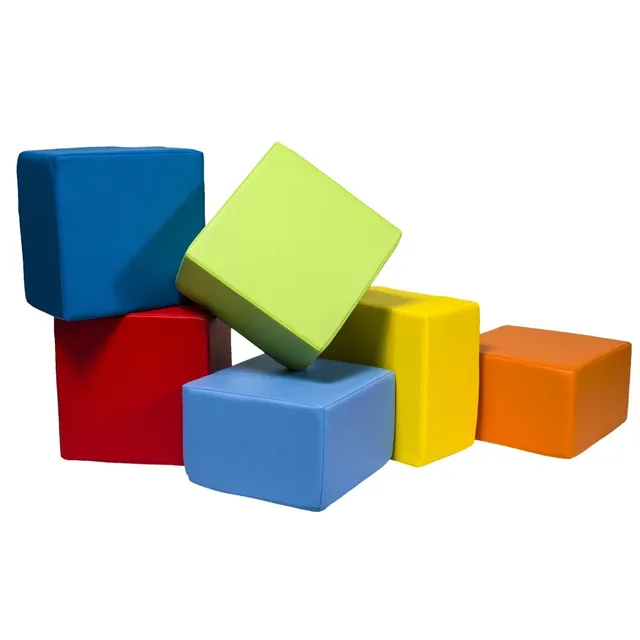
Giant Building Blocks make indoor construction more comfortable, creative, and exciting for children who enjoy hands-on play. Giant Building Blocks made from soft foam give young builders the freedom to stack, arrange, connect, and rebuild imaginative structures without the hard feel of traditional construction toys. With Giant Building Blocks, children can create castles, towers, houses, bridges, tunnels, and play spaces while exploring their creativity. For parents, educators, and childcare providers, Giant Building Blocks offer an engaging combination of imaginative construction, active play, and developmental learning in a versatile format.
Why Soft Foam Building Blocks Are Popular
Soft foam construction pieces are appealing because they combine the creativity of building with a lightweight and comfortable material. Children can easily move many foam pieces around a suitable play area and experiment with different designs.
Unlike rigid construction materials, foam blocks can provide a softer building experience. This can be especially useful for indoor playrooms, classrooms, and supervised childcare environments where adults want children to have an active construction activity.
Lightweight Construction
One of the biggest advantages of foam building pieces is their lightweight nature. Children can generally move individual pieces more easily than heavier construction materials.
This encourages independent play. Children can collect pieces, transport them to a building area, and adjust their designs as they work.
Comfortable Indoor Play
Soft materials can make construction play feel more approachable for young children. Instead of focusing only on creating a structure, children can interact with their building environment through movement and pretend play.
Giant Building Blocks made with suitable foam materials can become part of a creative indoor play area where children have opportunities to construct, explore, and rebuild. For more information about large building blocks for kids, explore their features, benefits, age suitability, and role in encouraging imaginative and educational play.
Creative Benefits of Giant Building Blocks
Open-ended construction gives children freedom to decide what they want to create. There is no requirement to produce one particular structure, so children can explore ideas at their own pace.
Encouraging Imagination
A simple set of foam pieces can become almost anything in a child's imagination. A group of blocks might represent a castle, a train station, a rocket, or a secret hideout.
Giant Building Blocks encourage children to transform basic shapes into imaginative environments. Once a structure is complete, it can also become part of a pretend-play story.
Learning Through Experimentation
Construction involves trial and error. Children may discover that a tall tower becomes unstable or that a particular arrangement creates a stronger foundation.
Instead of treating these results as failures, children can rebuild and experiment with another design. This process supports persistence and flexible thinking.
Developmental Advantages of Foam Construction
Building activities can support several areas of childhood development. Children use physical coordination while also making decisions and solving problems.
Motor Skills
Moving, lifting, stacking, and arranging foam pieces can encourage gross motor activity. Children also practice hand-eye coordination when positioning individual pieces.
Because the activity involves movement throughout the play space, construction can be an active alternative to sedentary indoor entertainment.
Spatial Awareness
Building helps children understand how objects relate to one another. They can explore concepts such as height, width, balance, position, and distance.
Giant Building Blocks provide physical examples of these concepts. Children can see how changing one part of a structure affects the overall design.
Problem-Solving Skills
Construction naturally presents challenges. Children must determine how to make structures stable and how to achieve the design they have imagined.
If their structure does not work, they can identify what needs to change. This encourages analytical thinking while keeping the learning experience playful.
Fun Foam Building Activities
There are many ways parents and educators can turn soft construction pieces into exciting activities.
Build a Soft Foam Castle
Invite children to create a castle with towers, walls, gates, and imaginary rooms. Once the structure is finished, children can create stories around their castle.
The project can involve role-play, storytelling, and collaborative construction. Children can pretend to be explorers, friendly dragons, royal characters, or castle builders.
Create a Foam Block Fort
A fort can become a special indoor play space. Children can design walls, entrances, small rooms, or sections for different pretend activities.
Giant Building Blocks are useful for fort-building because their larger format allows children to create structures they can interact with directly.
Build an Animal Habitat
Ask children to design a home for an imaginary animal. They can create walls, shelters, feeding areas, and pathways.
This activity can also introduce conversations about real animal habitats. Children can discuss what different animals need while creating their own imaginative environments.
Giant Building Blocks for Group Play
Foam construction is also well suited to cooperative activities. When several children build together, they must share materials and communicate about their ideas.
Collaborative Construction
A group can work on one large structure or create several connected designs. For example, one child might build a house while another creates a bridge connecting it to a tower.
This approach teaches children that different ideas can become part of one larger project.
Communication and Teamwork
Children naturally need to communicate while constructing. They may ask for specific pieces, explain their plans, or suggest changes to the design.
Giant Building Blocks provide an interactive setting where children can practice these social skills while working toward a common goal.
Choosing Quality Foam Building Blocks
Parents and educators should consider material quality, size, construction, storage, and age suitability before selecting a foam building set.
Foam Quality and Construction
Look for foam pieces designed specifically for children's play. Surfaces should be comfortable to handle, and pieces should be appropriately constructed for repeated use.
It is also important to follow the manufacturer's age recommendations and care instructions.
Size and Set Variety
Different sets contain different shapes and dimensions. A versatile collection may include rectangles, squares, cylinders, arches, and other forms.
A variety of shapes can give children more creative possibilities. Larger sets can also support group projects and more elaborate structures.
Storage Considerations
Foam pieces can still take up significant space, particularly when a set contains many oversized components. Storage baskets, shelves, or designated play areas can help keep construction materials organized.
Teaching children to return pieces after play can also encourage responsibility and make future building sessions easier to start.
Using Giant Building Blocks for Learning
Soft construction pieces can support educational activities without making play feel like a formal lesson. Parents can introduce counting games, shape recognition, color sorting, and simple measurement challenges.
For example, children can count how many blocks they used to build a wall. They can compare two towers and determine which one is taller or arrange pieces according to shape.
Giant Building Blocks can also support language development. Ask children to describe their structures, explain what each part does, or create a story about their completed project.
Simple STEM Exploration
Construction introduces basic STEM concepts such as balance, stability, geometry, measurement, and design. Children can discover these principles through direct experimentation.
Adults can encourage exploration with questions such as, “What makes your tower stronger?” or “What happens when you move this piece?” Such questions promote curiosity without taking control of the activity.
Safety Tips for Soft Foam Construction
Although foam blocks are soft, safe play practices are still important. Select products appropriate for the child's age and follow the manufacturer's instructions.
Children should have enough room to build and move safely. Keep construction activities away from stairs, sharp furniture, fragile objects, and other potential hazards.
Avoid allowing children to throw blocks at other people. Tall structures should be created in appropriate areas and under suitable supervision.
Inspect foam pieces regularly for tears, exposed material, damaged surfaces, or other problems. Damaged pieces should be removed from use.
Frequently Asked Questions
1. What are Giant Building Blocks made from?
Giant Building Blocks can be made from several materials, including foam. Soft foam versions are designed to provide a lightweight and comfortable construction experience for appropriate indoor play environments.
2. Are foam blocks good for creative play?
Yes. Foam construction pieces are well suited to open-ended play. Children can build towers, forts, castles, houses, bridges, and imaginative environments while experimenting with different designs.
3. What skills can children develop with foam building blocks?
Construction play can support motor coordination, spatial awareness, problem-solving, creativity, communication, teamwork, and persistence.
4. Can Giant Building Blocks be used in classrooms?
Yes. Age-appropriate construction blocks can be used for creative activities, group projects, shape recognition, counting, measurement, storytelling, and introductory STEM exploration.
5. How should foam building blocks be maintained?
Follow the manufacturer's cleaning and storage instructions. Store pieces in a clean, dry location and inspect them regularly for tears, damage, or other signs of wear.
Conclusion
Giant Building Blocks made from soft foam provide children with an enjoyable way to explore construction, imagination, and active indoor play. Their lightweight format can make it easier for young builders to move pieces, experiment with designs, and create structures that support pretend play. Giant Building Blocks can become castles, forts, towers, animal habitats, cities, and countless other creations depending on each child's imagination. They can also support motor development, spatial awareness, problem-solving, communication, and teamwork. With age-appropriate materials, sufficient space, proper supervision, and regular inspection, Giant Building Blocks can become a versatile addition to a child's play environment. Soft foam construction combines comfort and creativity, giving children the freedom to build, rebuild, and discover new possibilities through every play session.